
Nervous system · Attachment · Breathwork · Relationships
It's not weakness. It's your body holding on to what it knows.
You don't need to "move on." You need to understand why your body keeps holding on — through breakup panic, obsessive thoughts, and emotional withdrawal.
→ Next workshop: 23 September 2026, Casa Flora (San Benedetto Po) — limited spots Learn more

The myth
The myth of the clean break
"Just cut contact and move on." "Time heals." "Focus on yourself." This advice assumes that letting go is a decision. For an attachment system, it isn't.
When a bond ends, your body doesn't receive the memo. The person who was your safe base is suddenly gone, and the nervous system reads that absence as danger. Panic, obsessive checking, insomnia, the pull to text at 2 a.m.: this is withdrawal, not weakness — and no amount of willpower switches it off.
You don't need more discipline. You need a body that feels safe enough to release its grip.
Who this is for
You might recognise yourself
Every breakup hurts differently. These are the five shapes I see most often — you may be more than one.
Can't Let Go
It ended months ago and you still check their profile, replay conversations, wait for a sign. Part of you knows; the rest of you can't stop.
The Rollercoaster
On-again, off-again. Every reunion feels like relief, every rupture like dying. You're exhausted and you can't find the exit.
Lost Self
You gave so much of yourself that now, alone, you don't know who you are, what you like, or what you want.
Left With Guilt
You were the one who left — and nobody understands why you're still in pieces. Relief and grief in the same breath.
The One Who Was Left
No warning, no closure. Your body is still waiting for an answer that isn't coming, and the shock hasn't worn off.
You don't have to hold this alone.
Free 20-min clarity call →
How we work
The Breakup Recovery Framework
Four movements, in the order your nervous system needs them — not the order advice columns suggest.
Shock & Body
First, we calm the alarm. Breath, grounding and somatic tools bring the body out of emergency so you can sleep, eat and think again.
Attachment Story
Then we understand why this particular loss hits so hard: your attachment pattern, the old wounds it reopened, the role this person played.
Withdrawal
We move through the craving instead of fighting it. No-contact that supports you, tools for the 2 a.m. urge, a plan for relapses.
New Narrative
Finally, you rewrite what this ending means — for who you are and for how you want to love next time. Not from fear. From choice.
Ways to work together
Support that matches where you are
From one emergency session to a full path. Online, in English, Italian, German or Romanian.
Single session · 90 minutes
1:1 Breakup First Aid
For the acute phase. We stabilise the body, look at what's happening and leave with a concrete plan for the next days.
I need help now6 weekly sessions + practices between sessions
6-Week Separation Recovery Program
The full framework: from shock to new narrative. For those who want to actually get through this, not just survive it.
Start with a free callSmall group · in person or online
Group Workshop
Breathwork and somatic practice with people who understand. For the phase when you're ready to be seen again.
See the next workshopNot sure which one? The free 20-minute call is exactly for that. Offer →
Free guide
A 5-Minute Somatic Practice to Calm Breakup Panic
For the moments when your chest tightens and your thoughts race. A short practice you can do anywhere, plus what to do in the first 72 hours and how to hold the urge to text.
Free · 20 minutes
Not sure where to begin? Book a free clarity call.
Twenty minutes to tell me what's happening and hear honestly whether I can help. No pitch, no pressure.
Book my free clarity call- 01
You request the call and suggest a few time slots.
- 02
I confirm within 24–48 hours.
- 03
We talk. You decide the next step — or none.

About Cristina
I specialise in one thing: helping bodies let go.
I'm Cristina Panainte, a trauma-informed practitioner in attachment work, somatic experiencing and breathwork. For years I've worked with women and men in the most disorienting phase of a relationship: its ending.
I know this terrain from the inside. My own separation taught me that insight alone doesn't stop the panic — the body has to learn safety first. That is what shaped my method: attachment psychology, nervous system regulation and breath, in that order.
I work online in English, Italian, German and Romanian, with one clear promise: you will not be rushed, judged or told to 'just move on'.
More about me →Questions
Breakup recovery — frequently asked
Do I have to go no-contact?+
Not as a punishment, and not overnight. We look at what contact does to your nervous system and build the version of distance that protects you — including when children, work or a shared home make total silence impossible.
Why can't I let go even though I know it's over?+
Because knowing is cognitive and attachment is physiological. Your body registered this person as a safe base; losing them triggers the same alarm as real danger. That grip loosens when the body feels safe again — not when you argue with it.
How long does it take?+
The acute panic usually settles within a few sessions. The deeper work — understanding the pattern and rewriting the story — typically unfolds over the 6-week program. Everyone's timeline is different; there's no 'should'.
What if they come back?+
We prepare for that. Part of the work is being able to meet that moment from clarity instead of craving, so whatever you choose, it's actually a choice.
Is this therapy?+
It's trauma-informed, somatic coaching and counseling. It complements, but does not replace, mental health care. If you're in danger or having thoughts of harming yourself, please contact emergency services first.
I'm the one who left. Can I still come?+
Yes. Leaving doesn't cancel grief, and guilt is one of the loneliest forms of it. You deserve support too.
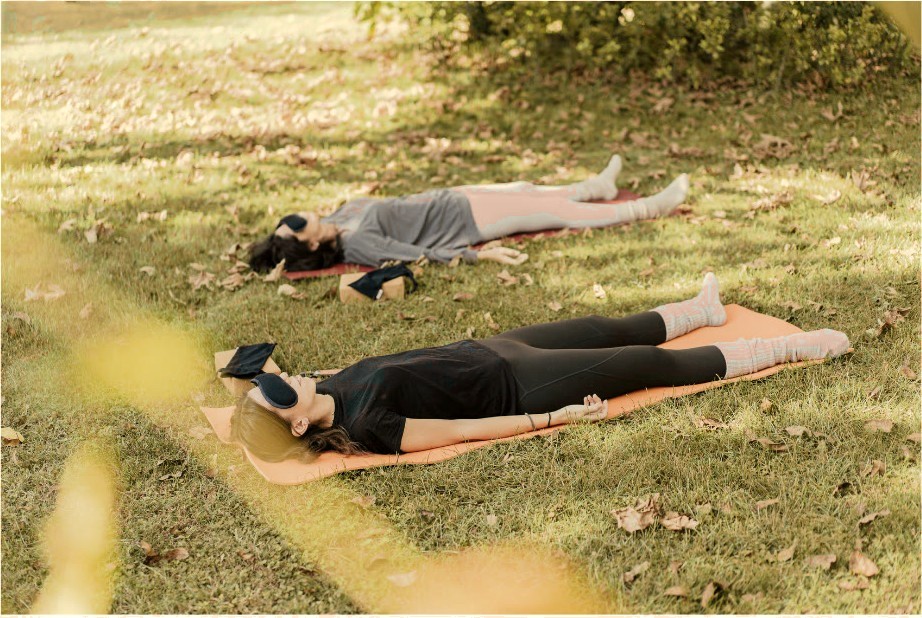
You don't have to hold this alone.
Whether it ended yesterday or a year ago, whether you left or were left — there is a way through that doesn't require you to be stronger than you are right now.